



MU exposed tactical worrying issues in the defeat to Newcastle



The 1-2 loss to Newcastle in the early hours of March 5 not only cost Manchester United crucial points in the Premier League top race, but also exposed issues in interim manager Michael Carrick's tactical arrangement.
In the early stages of Carrick's tenure, MU often operated their attack with Bryan Mbeumo as the central striker, Amad Diallo on the right wing, and Patrick Dorgu or Matheus Cunha on the left flank. This trio created good connections through quick combinations around the penalty area, while maintaining width in their attacking approach.
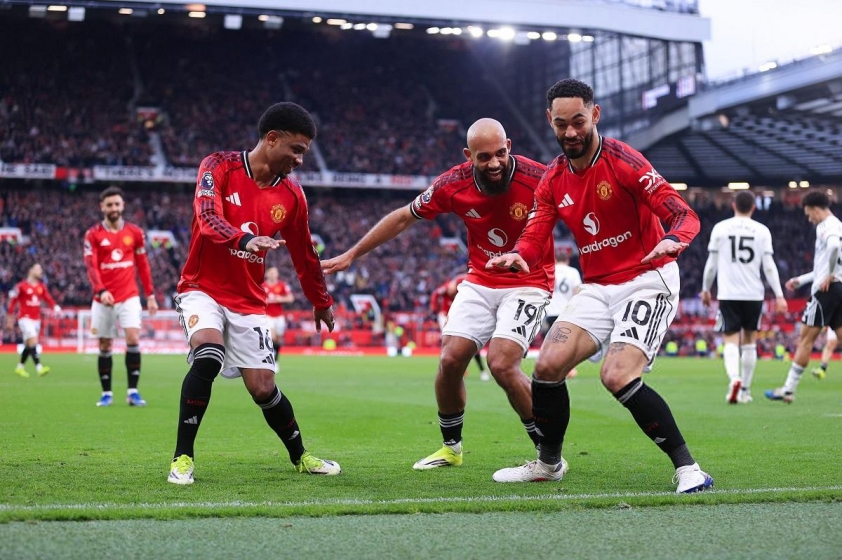
However, due to the good form of Benjamin Sesko, Carrick had to alter his previously successful formula. In the last two matches, Sesko was pushed up as the central striker, while Mbeumo shifted to the right wing and Amad started from the bench. This change was intended to enhance presence in the box, but in reality, it disrupted MU's attacking balance.
Unlike Amad – a winger who tends to stay wide and make direct runs, Mbeumo prefers to cut inside with the ball. When both Mbeumo and Cunha on the opposite flank drifted centrally, MU largely lost the width needed to stretch Newcastle's defense. The consequence was clear: Sesko became isolated up front and rarely received quality service from the wings.
Post-match statistics highlighted Mbeumo's ineffectiveness in the winger role. In his 77 minutes on the pitch, the Cameroonian international had only 36 touches, with a mere 8 inside Newcastle's penalty area. He attempted 4 crosses, none of which were accurate.
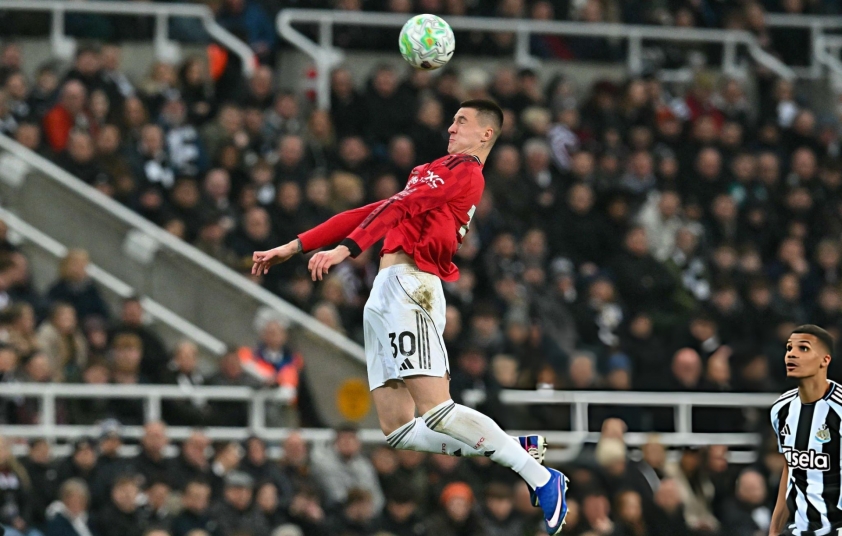
Individual dribbling threat was also almost nonexistent. Mbeumo did not complete a single successful dribble, took one off-target shot, and missed a clear chance with an expected goals (xG) value of just 0.23.
In duels, the 26-year-old also struggled, winning only 2 out of 7 ground duels and committing 4 fouls. Despite some defensive contributions like 2 tackles and 2 interceptions, these numbers were insufficient to compensate for his lack of attacking impact.
MU's narrow formation also played into Newcastle's strengths. Eddie Howe's team is renowned for its intense pressing; having their players positioned close together allowed Newcastle to excel in their preferred style.
When defending, Newcastle maintained a deep block, congesting the central areas where both Mbeumo and Cunha frequently drifted inside, leaving MU struggling to create openings. Even when Newcastle were reduced to ten men for much of the second half, MU failed to generate sufficient pressure. This indicates the issue was not just individual form, but the overall tactical approach.
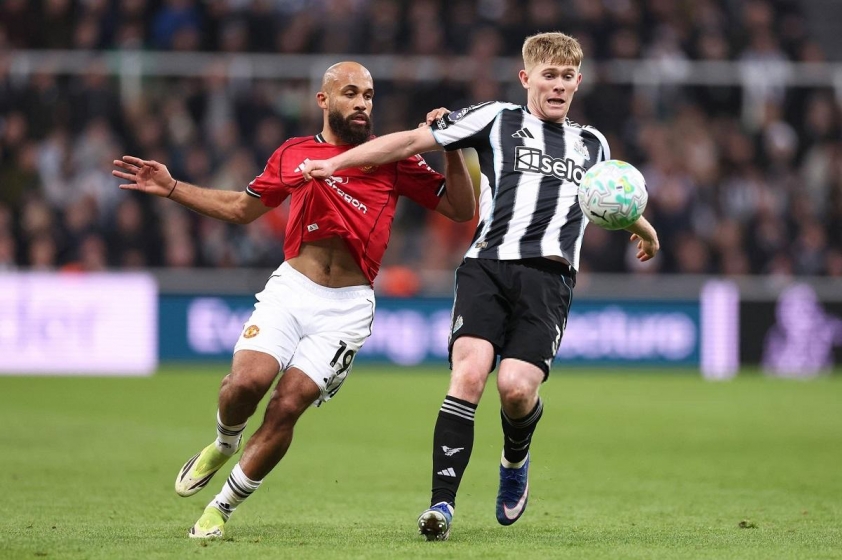
This defeat once again raises questions about Carrick's personnel usage. Pushing Mbeumo out wide deprived MU of a dynamic central attacking threat, while Sesko – a striker who relies heavily on wing service – did not receive adequate support.
To improve their ability to break down deep-lying defenses, Carrick may need to consider restoring Mbeumo to his familiar central role and redeploying a genuine wide player like Amad Diallo. Only by reestablishing width in attack can MU create clearer scoring opportunities.
Therefore, the loss to Newcastle is not just a simple stumble, but a warning for Carrick. If they aim to maintain a top position and pursue long-term ambitions, the Red Devils need a more stable tactical system rather than ineffective experiments.



 Links
Links
 Contact
Address:123
Number:+123
E-mali:i123@gmail.com
 App
App