


Tottenham - Crystal Palace: Can Igor Tudor Save Spurs?



Tottenham Hotspur is experiencing one of the most dismal phases in its Premier League history. Having been contenders at the upper end of the table, the team is now in free fall, dangerously close to the bottom.
The prolonged crisis not only threatens their top-flight status but also puts manager Igor Tudor's future in a precarious position.
A comprehensive sporting crisis
A winless run in the Premier League since December 2025 has plunged Tottenham into turmoil. Consecutive defeats against direct rivals, coupled with inconsistent performances even at home in the Tottenham Hotspur Stadium, have completely shattered the team's confidence.
Spurs' biggest issue lies in their instability and lack of tactical identity. Under Tudor, the team has failed to establish a clear style of play. They can show promise in one half, like their second-half display against Fulham, but quickly lose control due to individual errors and a fragile defensive system. This defensive vulnerability often costs Tottenham their advantages, while the attack lacks sharpness in decisive moments.
The squad is also a major concern. Letting Brennan Johnson leave has become a contentious topic, as Spurs lack a suitable wide attacking option. With alternatives like Xavi Simons or Conor Gallagher not being optimal on the wings, Tottenham appears to lack depth and unpredictability.
Relying on moments of individual brilliance from Richarlison or the potential of Mathys Tel is insufficient for long-term stability. A team aiming to secure its Premier League status needs a clear tactical structure and mental resilience—qualities Spurs currently lack.
More worryingly, the atmosphere around the club is growing increasingly tense. Every match now feels like a "reversed final." Pressure from the stands and the media is mounting, especially as Tottenham keeps dropping points against direct competitors. If results don't improve soon, the threat of relegation is becoming very real.
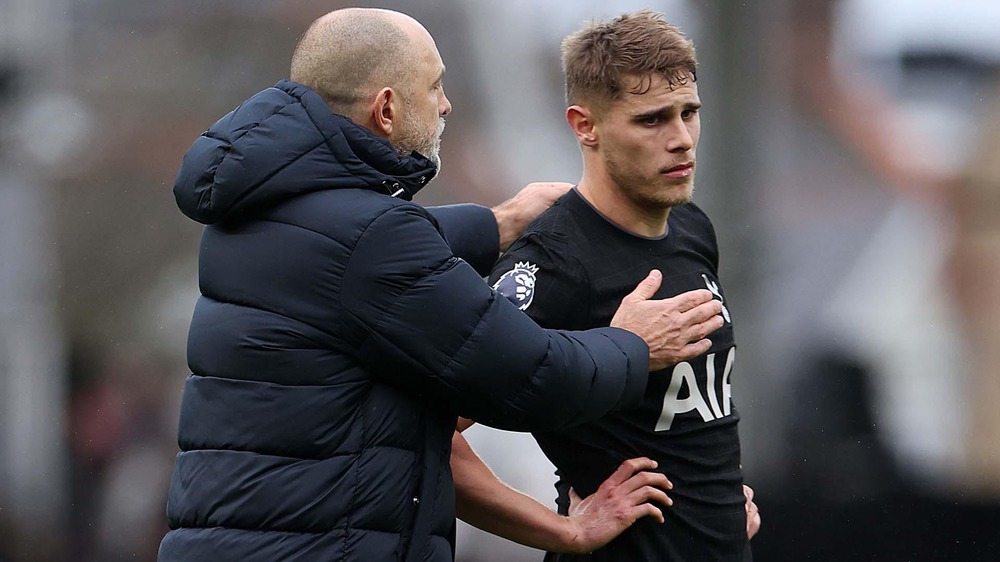
Tottenham is stuck in a rut this season
Igor Tudor's future and the restructuring at the top
In this context, Igor Tudor's position is more precarious than ever. The Croatian coach was expected to bring new discipline and energy, but so far his tactical imprint remains faint. Tottenham under his leadership has not shown clear progress, either in results or in the style of play.
Tudor's problem isn't just tactical; it's also about belief. When a team remains stuck for too long, the board is forced to consider a change to provide a psychological boost. Premier League history shows that clubs often act decisively when relegation becomes a tangible threat, and Spurs are unlikely to be an exception.
Alongside the instability in the dugout, Tottenham is also seeking to restructure its upper management. Their approach for Paul Winstanley, Chelsea's sporting director, indicates that Spurs recognize the issue isn't solely with the head coach. They need a long-term strategic architect to define a philosophy and a sustainable direction, rather than making short-term decisions.
In this picture, the name Mauricio Pochettino is being mentioned again. The Argentine manager left a positive legacy at Tottenham and is now seen as a potential candidate to restore the team's energetic, attacking identity. If the board is serious about a comprehensive rebuild, appointing a new sporting director could be the first step toward a change in the managerial seat.
However, any long-term plan becomes meaningless if Spurs don't stay in the Premier League. This pressure weighs heavily on Tudor with every match. Another defeat, especially against a direct rival like Crystal Palace, could be the final straw.
Tottenham stands at a major crossroads. Either they rediscover their unity and form to save themselves, or the board will be forced to trigger a managerial change to salvage the season. In the ruthless world of football, time waits for no one, and for Igor Tudor, that time seems to be running out.


Wonderfulshortvideo
Great defending from Rüdiger 👏


 Links
Links
 Contact
Address:123
Number:+123
E-mali:i123@gmail.com
 App
App